autism

World’s Best Coper

To cope.

According to the dictionary, the word cope generally means to successfully deal with or handle something that is difficult. Another dictionary refers to it as overcoming problems and difficulties.

While I’m not sure how successful I am, I’ve developed decent ways of coping with my severe sensory problems. I am a good coper…sometimes.

Picture 46

People cope in their own way. People with sensory problems like myself have to resort to coping in strange ways. Let’s explore some of those ways in which people with sensory problems cope:

1. DEEP PRESSURE

Those of us with wacky sensory junk have a strange affliction for the sensation of touch. We hate it. We love it. If you’re like me, you can’t stand light touches, but love deep pressure. To fulfill my need for sensory stability, I need a buddy. Usually my sister, the helpless victim to my needs:

sitonme1

sitonme2

Ahh, sisterly bonding at its finest.

2. WALKING/RUNNING

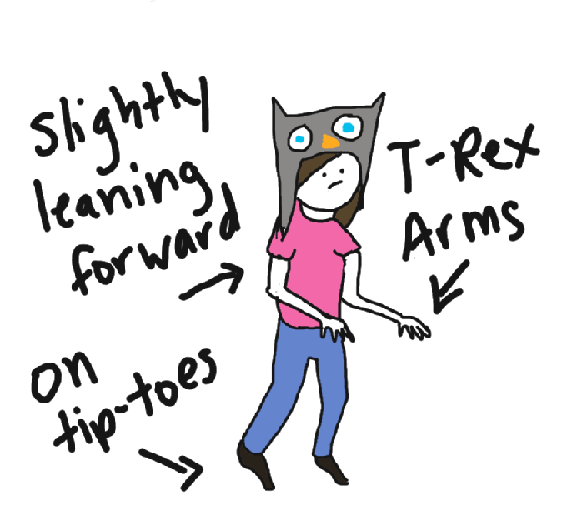
Another great way to soothe sensory-related anxiety is to go for a walk or run. The feeling of your feet on the ground can be very stabilizing. But be careful, sometimes walking when overstimulated can leave you dizzy and freaky-looking (see my post about turning into a T-REX).

As I was saying, walking and running can be great.

Unless you are a weirdo like me, and since toddlerhood have been pacing for hours in confined spaces, like a bathroom.

pace right

pace left

INITIATE LAUNCH SEQUENCE. TURBO ENGINES….GOOO!

warpspeed


Fun Fact: I still do this all the time. Also, I’m still single. AMAZING, I know.

3. ROCKING CHAIR-ING

On the 8th day, God made the rocking chair, so people with sensory problems can experience its glory and power. That day, praises for the chair were sung by all the angels…..all five of them. They sang really loud to compensate for the lack of angels:

angel rocker

The rocking chair and I fell in deep, disgusting love. Cheesy one-liners starting appearing:

love rocker

The movement of being in a rocking chair is so wonderful – so calming to my sensory system – I feel as if I’m being transported through space, through time even! It’s like the twilight zone, except, it’s not. It’s just me in a chair.

space rocker

Then something like this happens:

special rocker


4. BICYCLE RIDING

So this one may not be for everyone. But this works for me….and this is my blog. So there.

I very much enjoy bike riding. The combo of using my legs to push the pedals and using my arms to hold and steer myself provides great relief when I’m overstimulated. I would ride my bike more often, except I live in a fairly rural area of New York. I can’t ride without fear of this happening:

Picture 55


5. BRUSHING

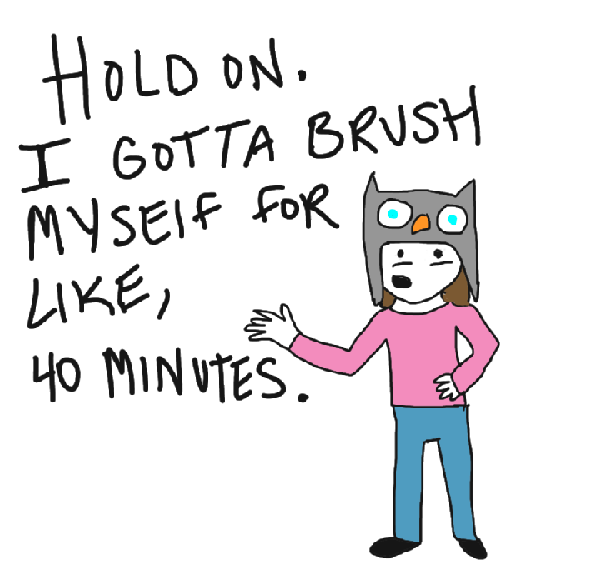
I’ve mentioned brushing in a previous post (Occupational Therapy Adventure). Sensory brushes are great as they provide deep pressure to numerous parts of the body. I like the consistency that brushing provides, and I also like that I can control it myself. What person with SPD doesn’t love control, AM I RIGHT?

The only strange part about using brushing to cope with sensory issues is that it can be rather odd to tell someone about. For instance:

Picture 44

Picture 45

Picture 46

Picture 48

Picture 50


And that’s how the cookie crumbles. I have many other less boring but still strange ways of coping with my SPD, as I’m sure many of you do as well, but I’m going to end it here. Moral of today’s post: if a Hollister model dressed in a fancy suit wants to take you out for a nice dinner date, don’t tell him you have to brush yourself for 40 minutes (even if you DO). This has never happened to me, but when it does, I will be ready. I will be PRE-BRUSHED.

xo kelly
I AM THE T-REX

So there’s this funny thing that happens to me when I experience sensory overload. Apparently I’ve had it for quite some time now, but I’ve only just given it a name and I’m working on stopping it. Sort of.

I call it, T-REX. It sounds way cooler than it actually is.

When I am over-stimulated, I struggle with what’s called proprioception. This is the ability to be aware of my own body movements and my spatial orientation, or position of my body and limbs.  In other words, it’s the ability of me knowing where my body is and what it’s doing. People with sensory difficulties may struggle with proprioception, although it’s not usually discussed because it’s not something general (like sound, touch, taste, etc).

In any case, when I experience this, my body and brain attempt to fix my sensory issues on their own and it doesn’t always work out so well for them.

It’s like when your husband says to you, “Honey, I’ll fix that leaking faucet even though I’ve never done so before but I totally can do it anyway.” The next thing you know, the faucet has exploded and there’s two inches of water in your home. Your husband put some duct tape around it and it’s “good enough I guess.” It has stopped leaking, but it’s certainly not fixed.

When my brain and body are over-run with sensory junk and they fail to fix it, they use their own version of duct tape. My brain tells my body to contort into the position of your average, everyday tyrannosaurus rex. It looks a little something like this:

Picture 8

Not only is this embarrassing, but I have no awareness of doing it. When I try to change my position, it’s extremely difficult if not, impossible. The T-rex pose is the only way my body and brain have decided to put a temporary fix on a problem they cannot seem to solve. I can only assume this pose comes from my brain trying to find balance.

When my mom and I are out together and she sees me doing this, she whisper/yells “T-REX. T-REX. T-REX.”

My mom then suggests that I try to change my arm position into a more normal-looking one. She says, “swing your arms!” But my arms refuse to. Instead, they swing in unison and I look even worse. It gets me weird looks and small children cry at the sight of it.

Picture 9


When all else fails, I must embrace it. I become the T-Rex, I AM THE T-REX.

Picture 11


xoxo kelly


SPD vs just being sensitive

I have found that there appears to be a bit of confusion as to what it means to be sensory sensitive.

This confusion comes in many forms.

One area of confusion is often with children. I have read about and seen several instances where children display very poor behavior and their parent(s) explains that they have a sensory processing disorder (or something of that nature). While I don’t doubt that children with sensory sensitivities are prone to tantrums, meltdowns, and strange behavior or movements, SPD is becoming the name given to out-of-control children as an excuse for their behavior.

For example, I was in a bookstore and there was a young boy running around, making too much noise, taking things off the shelves, and generally causing mayhem and not caring what his mother had to say about it. I overheard his mother tell someone, “Well, he has the sensory processing thing, so…”

ok.

Who knows. Maybe this four year old boy did have sensory issues, but that shouldn’t be the excuse for his unruly behavior. Unfortunately, I see this a lot. It is becoming a default diagnosis for badly behaved children who don’t fit into other categories. It sounds like this:

“Your child likes to throw and break stuff? SPD.”

“Your child doesn’t listen to you at all? SPD.”

“Your child screams and punches you? SPD.”

This is very scary, considering the fact that I know how real SPD is, and that there are many children and adults with it, yet, it is becoming very much like ADHD in that it is being overly-used to compensate for lack of decent parenting or other issues in children. Then what happens is that people who DO have sensory issues are not taken seriously by the medical community.


The second area of confusion I’ve noticed is that there are people who don’t understand the concept of SPD and claim that every little thing that bothers or annoys them is because of a sensory processing issue. This is not true.

So let me give you a little demonstration:

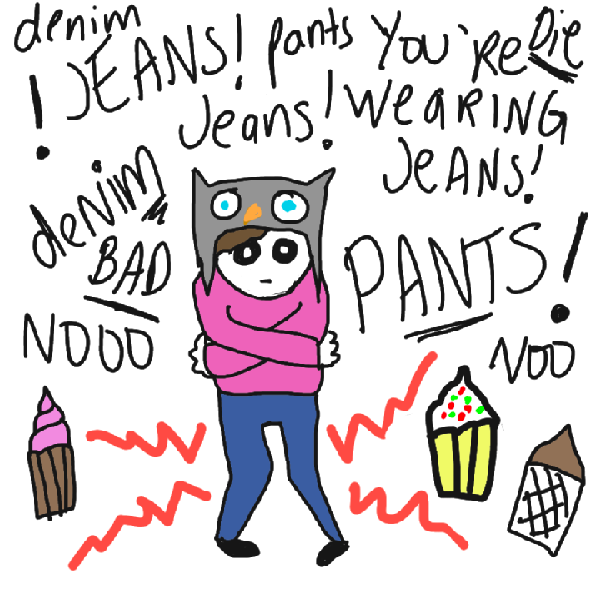
Person WITHOUT SPD (a generally sensitive person):

Picture 5

TWO SECONDS LATER….

Picture 8


Person WITH SPD (a person with a sensory disorder):

Picture 9

TWO SECONDS LATER….

Picture 11


Can you see the difference?

A person who is generally sensitive to things may be bothered by something, but they have the ability  to push that sensitivity into the back of their mind. It no longer bothers them, and maybe they notice it….but they have the ability to remain calm and focus on other things despite this sensory annoyance.

A person who has SPD cannot stop perceiving sensory input (unless you are a hypo-sensitive person who needs MORE sensory input, than this little bit doesn’t apply to you, but you get the gist). The jeans are more than uncomfortable – they are disturbing and nothing else matters (NOT EVEN CUPCAKES) because my brain cannot stop being upset with the sensation of denim jeans on my legs. I cannot focus on anything else, and I definitely do not feel calm.

The latter story ends something like this:

Picture 21


I hope this post has helped clarify the difference between being annoyed by a sensation, and having a sensory problem. As usual, comments or discussion is welcome!

Also, here’s me and a giant cupcake:

Picture 22


-xoxo kelly

Occupational Therapy Adventure (for SPD)

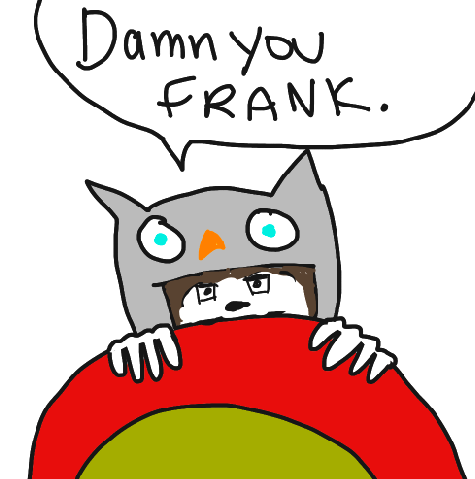
Back in the glorious and confusing days of my childhood, I went to see an occupational therapist once a week to help with my sensory integration/processing disorder. His name was Frank, and he was a young guy who was extremely good looking (and now I CURSE myself because I never appreciated his attractiveness). I was obviously too distracted by the fact that I was 9 years old and more interested in the candy I received at the end of the session. Here’s a picture of Frank:

Picture 59

Alright, so that’s not exactly him.  It’s just a picture of a hot, shirtless guy I found on google, but let’s all pretend this is Frank.

————————— *————————–

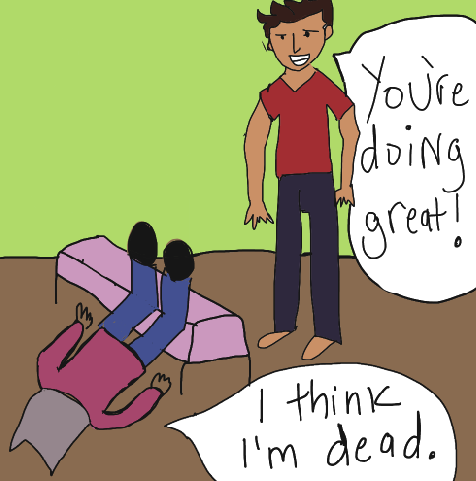
Frank and I did LOTS of things in our short time together each week. He made me walk across a balance beam. This was to re-orient my vestibular system. I hated that. Frank would counter with some sort of ‘comforting statement’ like, “You’re only 2 inches off the ground.”

Picture 60

Not very comforting Frank. Your charm and wit didn’t amuse me.

Picture 61

Then he made me stick my hands in some glue and junk. We turned it green using dye, because why the heck not? It is very hard to describe to people who don’t have a sensory problem how it feels to do something that bothers your sensory problem, like sticking your hand in an icky substance. All I knew was that it was more than uncomfortable, and it created ugly signals in my brain. Therefore, I hated that too.

Picture 63

Picture 62

Sometimes he would suggest that I take a trip through the rainbow tunnel. You know the kind – a small, plastic tunnel that most children enjoying crawling through.

Picture 65

Not me though. My sensory system interpreted small, unfamiliar spaces as threatening:

Picture 66

Picture 67

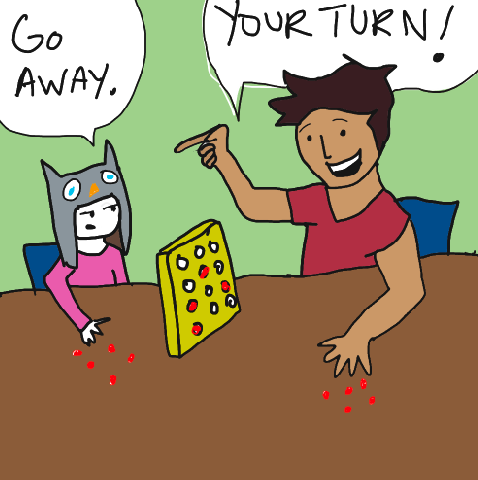
Then we played a stupid game, Connect Four. (Though not as stupid as the game I wrote about in my last post, Operation). I hated this the most because the sounds of the game were sudden and unpleasant. “This game is the pits,” I casually mentioned to Frank.

Frank chuckled at my statement, rested his perfectly featured face upon his hand, and encouraged me to finish the game. I couldn’t wait to tell my mom that she was paying a man to watch me play games that I didn’t even like. UNBELIEVABLE!

At this point of my OT session, I was slightly irritated with Frank. His smiley-ness and optimism was all too much for one girl to take.

Picture 64

But it was not over yet. Before my OT session with Frank ended, he would spend the last several minutes doing joint compressions (pressing my joints in gently) and brushing. The brush looks like this:

Sensory-Surgical-Brush1

It’s kind of FANTASTIC. (Although, those without sensory deep-pressure needs may find the brush against their skin to be unpleasant or just weird).

But who cares about those people, this brush is wonderful. After some deep pressure exercises, brushing, and joint compressions, I felt like a new girl. My hatred for Frank and his gorgeous smiling face seemed to vanish. Things got a little freaky:

Picture 68

Finally at the end of the session, I received my candy of choice and went on my merry way. This lasted for a few weeks or so, possibly longer, I don’t actually remember.

What I do remember is the absurdity of it all, and yet, my strange willingness to comply. I continued the compressions and brushing at home, but I don’t think that alone was enough to counteract the intense over-stimulation I was experiencing daily at school. Still, it was something, and definitely an experience I will never forget.

-xo Kelly

Why Operation is the Weirdest Game Ever

I don’t know about you guys, but during my childhood there was one game that I absolutely despised playing: The game of Operation.

You all know it. The creepy naked dude with his internal organs exposed for children to poke at and remove for their selfish pleasures. Yes children, harvest the organs! HARVEST THEM.

But, that was not the worst part of the game. The terror was in the removal of the organs themselves. For if you didn’t do a decent job during the surgery, a loud and sudden buzzing sound would be released from the man’s body like it was his own bloody screaming.

As a child who was terrified by basically everything, and saw everything very seriously and realistically, this game was absolute horror.

Picture 15

Picture 17

What a nightmare.

Let’s look closer….

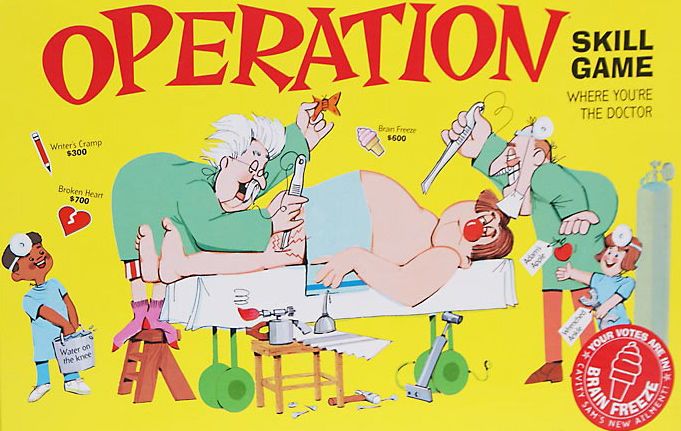
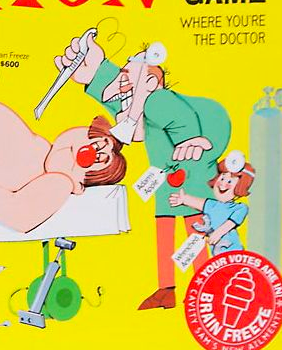
Here’s the box – it always freaked me out as a kid. Firstly, the dude on the table is AWAKE. Perhaps slightly drowsy, but definitely conscious. Naturally, I felt bad for him, and the pain he must have been experiencing during the game. For the sake of this post, let’s call this guy Norm.

operation-board-game

Norm clearly has a lot of medical problems, as demonstrated by the outrageous amount of surgery being done.

Looking at the box, we can see Norm with his inflamed red nose (which by the way is NOT addressed as a problem for him in the game). Does anyone care about Norm’s obvious nose issues?! No, no they don’t.

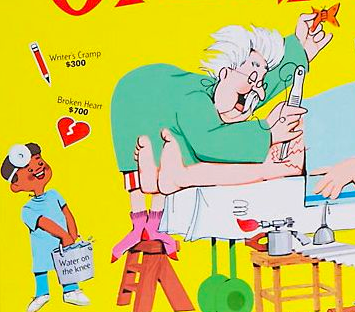
On the left, we have Einstein – in pink socks and red striped boxer shorts – holding a butterfly in one hand while jamming a ginormous metal device into Norm’s thigh.

Picture 10

Apparently pants aren’t required when you’re a surgeon. Also, he is unnecessarily standing on a tiny ladder. The whole procedure is disturbingly close to Norm’s crotch. Yes, I said it. You all noticed it too.

Behind Einstein is a small, cheerful boy holding a bucket of water and staring directly into Einstein’s butt. No further comment on that one.

Moving to the right, we have a taller fellow who looks like Ferris Bueller’s principal, Mr. Rooney.

Picture 11

This must have been his after-school job. Mr. Rooney appears to have serious back issues, but at least he’s wearing pants and shoes. And look! A face mask! …..not on his face though. SO CLOSE ROONEY! Below him is a happy little girl holding a very large weapon.

Picture 8

But it only gets weirder my friends! The game looks like this:

operation_game

Norm not only has a serious nasal condition, but also, terrible hair.

I’m going to point out the weirdest thing here: why on earth are we supposed to remove things like ice cream cones and butterflies and apples from this poor man? I get the creativity here, but from my childhood experience, it was all very disturbing.

Here I was, a young girl, expected to remove absurd objects from Norm’s naked body with a pair of giant tweezers while he looked up at me with that hairdo. I knew it was a stupid game, but I couldnt’ help but take it very seriously and the buzzing sound gave me tremendous anxiety. It wasn’t exactly a sensory-fun game.

None of my friends seemed to understand the fear.

Picture 12

Picture 13

(p.s. I loved my friends)

So there you have it. Operation is an irrational game where children are asked to pull foreign objects, like ice cream cones, from a naked man with a nose deformity.

May this game never see the light of day again.

xoxo ~Kelly

The Forgotten Component of Autism

There is something about autism that I’ve been going over and over in my head for many years now. I consider it the forgotten aspect of autism, or should I say, the ignored aspect of autism.

I am referring to sensory dysfunction, or sensory processing/integration disorder. Whatever you want to call it, the bottom line is that the sensory problems that are very much present in people across the autistic spectrum are not being recognized by professionals who are treating autism. Actually, they aren’t really recognized by anybody. This frightens me.

I recently graduated with my degree in psychology. During my education, autism was brought up frequently in many of my classes. What was alarming though, was that the information being taught about autism neglected to mention sensory features. In my textbooks and during lectures, I would learn about general autism. You know what I’m talking about: little verbal abilities, communication problems, social deficits, and learning impairment. I would raise my hand and mention the importance of sensory dysfunction in autistic people. The professor would either shoot me down or brush off my comment as not important to the field of autism. My peers never knew what I was talking about.

I began to panic, thinking that this must be a mistake, and that sensory problems were definitely a well known part of autism. I was so wrong.

Picture 17

As I began to research on my own, I discovered that many websites that had information about ASD neglected to include the significance of sensory problems. If you think about it, this is mostly true across the board of autism research. Ask someone what autism is, and they are likely to respond with: communication problems, tantrums, social impairment, nonverbal, etc. (Side note: I am aware that not all people with ASD have sensory problems, and that not all people with sensory problems have ASD, but the link between the two is too obvious to ignore.)

What the heck is going on you guys? I’m seriously concerned here.

The most common problem with autism IS sensory dysfunction, yet, this is rarely mentioned by the medical community and basically unknown to the general public. (Making Sense of Senses by Virginia Hughes, 2009. Link to the article at the bottom of my post).

I’ve heard things like:

“My child hates having things on his hands, like glue.” 

“My sister squints when she is in a bright room and she covers her ears in the mall.”

“This boy doesn’t like to be touched, but he wants to touch everything!”

My argument is that sensory problems are the basis for many of the more well-known aspects of autism, like communication and social impairments, verbal difficulties, learning problems, and most importantly, behavioral problems.

(By the way, a few months ago I read Temple Grandin’s book, The Autistic Brain, and was amazed to see that she basically said everything this post is about: the lack of research on the importance of sensory features. Temple stole my original idea but I’m going to let that slide even though I totally thought of it first). Ok, where was I….

I believe that sensory problems – which are being completely neglected in the field of autism – are responsible for the many problems that are commonly seen in people on the spectrum.

This idea makes so much sense to me because I live it. I KNOW that when my senses are overloaded, the rest of me (my ability to communicate, perform a task, regulate my emotions) is screwed. It is not until my sensory problems calm down that I am able to reorient myself to function.

If we look at the common behavioral features of people on the spectrum, it is clear (at least to me) that the behavior is a direct response to the lack of sensory processing ability. Basically, many autistic behaviors exist because the person is trying to sort out their sensory environment. For instance, the need for routine and consistency is highly valued by autistic people. I think this is because routine equates to predictable sensory environment. There will be no surprises, and we generally hate surprising things.

Self-soothing techniques is another example. To combat the disarray of sensory environment, people on the spectrum employ multiple self-soothing, or self-calming behaviors such as pacing, rocking, hand flapping, verbal repetition, etc.

Looking at autism, I feel it is crucial to focus on the internal processing that is causing the behaviors that are observable. Right now, information about autism and research about autism is so heavily concentrated on changing maladaptive behavior (tantrums, screaming, hand flapping, hyperactivity, etc). Are we forgetting to look at the causes of these behaviors? The fact that these behaviors are occurring because the person with autism is trying to make sense of their dysfunctional sensory processing and their overstimulating environment. It’s time to focus on altering the environment to suit the needs of the person, rather than trying to force the person to adapt to an unsuitable environment. The latter is absurd and is happening all the time. It’s time to focus on treatment for sensory problems, like a sensory diet, which allows the person to know their sensory limits and what to do to alleviate sensory overload.

And that’s my rant. I will most likely write more about this in the future, but I wanted to get this out of my system while I had the free time to do so. Thanks for reading….sorry for the lack of humorous illustrations like in my other posts.

Here is the link to the article, Making Sense of Senses, which I referred to in this post: https://sfari.org/news-and-opinion/blog/2009/making-sense-of-senses

Feel free to comment and share
xoxo
~Kelly~

Horse Therapy Adventure

Back in high school, when my dear mother was desperate to help me with the never-ending stream of problems that I faced, she opted to try healing with horses. Specifically horse back riding, or hippotherapy, which by the way, has nothing to do with hippos.

Picture 28

This is the part where I should explain my feelings regarding hippotherapy. However, you should know that I have great talent at blocking out huge chunks of time that may or may not have been traumatic. What you are about to read is my fuzzy recollection of my first day of horseback riding therapy. What is clear, however, is the fact that that day will never be forgotten.

I remember my mom and I walking into the place. The first thing that hit us was the smell. It was hard for me to get past. Everyone else seemed immune, or at least, mostly unaffected by the stench.

We were greeted by a cheery lady (her real name I can’t remember, so I will call her Susan) who gave me a helmet to wear. I think it was blue. But who cares what color it was.  Bottom line: I was HOT. See for yourself:

Picture 11

We went and sat with her in a tiny room with appalling lighting. My mom explained why I was here and how sensitive I was to, well, everything. She explained my severe sensory issues and my recent diagnosis of ASD. Susan said she understood my situation. That was too easy, I thought.

Susan walked my mom and I through a short hallway that led to a door. “This is the barn,” she said. The door opened up to a massive open space covered with hay.

Then she walked us to another door that opened up to stables. We opened the door and I nearly lost bladder control because this was the first thing I saw:

Picture 13

“She’s the largest breed of horse in the world,” said Susan. Also, the most insane-looking.

The next thing I knew, the horses all started smashing their hooves into their stable doors. BANG BANG BANG BANG!

Well, that was all I needed. Now that I was reduced to a pathetic crying blob in a helmet, Susan began to understand the seriousness of my situation.Picture 42

I was ushered quickly into the large barn where I waited for my horse.

My horse, I thought. I imagined something regal, majestic, and strong. Something along the lines of this:

4-amazing

Heck, I’d even settle for this:

white-horse

However, when my horse came into the barn, it looked more like this:

Picture 1

Ok. So it wasn’t what I had pictured in my mind….at all. Still, I would not give up hope. His name was Neil, I was told. “He’s very relaxed and he just loves everyone!” said Susan with delight.

Neil was a nearly as round as he was high. A blue blanket with yellow stars covered his back. I am unable to comment about Neil’s intelligence level at this time, but I’m certain it wasn’t too high. Still, there was an strong air of calm about him that I definitely appreciated.

I walked up a set of stairs and was placed onto Neil’s back. Although he could’ve passed for a miniature pony, I still felt disoriented and high-up off the ground. My grip tightened on his reins as we slowly started to walk out the barn and to the trails. The cheery lady guided Neil and another older woman walked next to me as I rode.

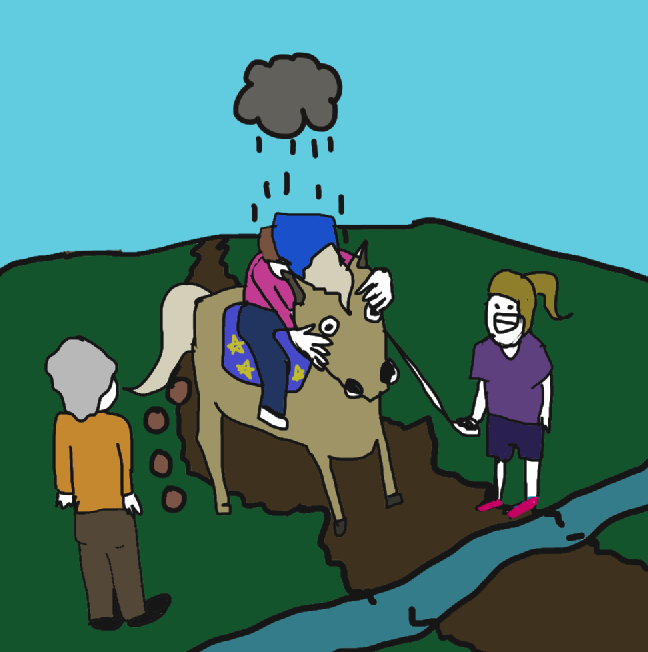
We barely walked three feet though when Neil stopped abruptly and I heard plopping sounds somewhere behind me. “Oh, he’s very relaxed,” Susan said, “he must like you!”

I was all like:

Picture 5

To my horror, I quickly realized that Neil was a popping-machine. It was practically his favorite activity. Outside the barn, the two women guided Neil down a short dirt path. “We’re going to try this hill now, ok?”

She made that sound like a question, but I knew she wasn’t really asking me. It was more of a command: WE ARE GOING OVER THE HILL KID.

With my already over-stimulated state from the stable trauma, and my terrible body-spatial awareness, going over the hill wasn’t going to be pretty.

I basically thought I was going to die. Neil probably thought so too, although he never said anything. He just kept pooping.

Picture 17

Picture 16

When I thought it couldn’t possibly get any worse, Susan said “Let’s walk Neil through this stream up here. Maybe he could stop and have a drink too.” Susan’s joyous spirit was making me nauseous. Maybe Neil could poop on her.

After several upsetting, sensory-crushing experiences, all sense of perspective was lost. Everything seemed bigger, more horrible and dangerous. This was no stream we were crossing…

Picture 19

Picture 21

Nobody cared though, so I buried my face into Neil’s mane and placed a death grip on his face. He probably disliked that, but again, he didn’t say anything to me. He pooped though.

Picture 23

Finally sensing my distress, Susan told me that we were going to walk around the ring. The ring was a dirt oval surrounded by a wooden fence. When we got there, another teen girl was riding a muscular black horse. I entered the ring, and the difference between the two of us and our horses was striking, if not, hilariously noticeable.

Picture 25

I sensed a air of superiority from her. Neil stopped pooping, so something was definitely going on. She was a professional rider on a champion horse. I knew she thought of me as one of “those kids” on “that horse.” And actually, I was. YEA. I WAS ONE OF THOSE KIDS ON THAT HORSE. So as she left the ring, I said out loud:

Picture 26

I’m not sure she heard me, but that doesn’t matter. What matters is that Neil and I survived steep mountains and the raging river. We braved the dirt paths and Susan’s annoyingly sunny demeanor.We were a united force. We were one.

Picture 27

And so my day of therapeutic horseback riding came to an end. I rode around the ring endlessly, somewhat enjoying the consistency of the circle. No hills, or waterways. Just dirt. It was all so…. unsurprising. Just how I like it.

And I learned that Neil may not have been the most impressive-looking creature, but he certainly had the confidence to carry me – having meltdown while clawing at his eyeballs – without flinching. I guess that’s why he’s a top-notch therapy horse. I’d bet ya that that other horse couldn’t do HALF of what Neil does.

-xoxo Kelly

By the way, here is a picture of the type of horse that Neil is. This isn’t him, but it looks just like him.

Good boy, Neil. Poop your way to victory.

picture_1621

What the heck is Sensory Processing Disorder?

What the heck is Sensory Processing Disorder (SPD)? Also called Sensory Integration Disorder, or, as I call it, “My brain hurts from all the noises and lights and junk. I can’t function or anything, so I’m just gonna go to bed.”

I have found that nobody knows what SPD is, or just how deeply it can impact a person’s life. So darn it all! I’m making a post about it.

First, what the heck is sensory processing?

All of our senses are processed through our nervous system. That is, information is collected by our senses and sent to the brain where it is processed and sorted. Once this is done, your brain tells you how to respond to that information.

Second, what the heck is sensory processing disorder?

The disorder part comes into play when the act of sensory processing goes haywire. The sensory information gathered by the nervous system is not correctly interpreted by the brain, which results in numerous symptoms and behaviors.

Picture 1

Picture 2

What happens then?

Well my friends, if your brain does not know how to understand the information that it is being fed, you’d better believe that your response to it will also be quite messed up.

For people with sensory disorders, the resulting behaviors from a malfunctioning sensory system can vary tremendously. For some, they turn-inward and become still and quiet. For others, they lash out and have a loud, head-banging, arm-flailing meltdown.

Personally, my body shuts-down. I cannot talk (or make sense when I do speak), or walk straight. I am disoriented, irritable, crying, and feeling completely detached and ill. The environment becomes simply too much to process, so my brain tells me to just turn off for a while.

What’s it like living in a sensory world?

As you can imagine, living with SPD is, shall we say, challenging. All aspects of living on planet Earth require that you have a functioning sensory system. This is especially true in Westernized societies where sensory stimulation is considered fun and enjoyable. Of course, it becomes less fun and less enjoyable when your brain cannot process sensory signals the way they should. The world becomes unexpected, chaotic, frightening, and confusing. Basic aspects of life such as taking a shower, cooking dinner, seeing friends, working, going to school, watching television, or eating become a battle.

Imagine showering if the feeling of water dripping on you made you want to run for your life, or the water temperature feels painfully cold for you, but to everyone else and their brother, it feels fine.

Imagine going to school where the bus is bumpy and the radio is painfully loud, and the seats are shiny and feel different and ugly on your skin. The children are noisy and they move fast, and the teacher gives you white paper that hurts your eyes to look at. Your hand won’t hold the pencil, and the lines and words are jumping and moving. In gym, you are terrified of climbing the cargo net but you love crashing yourself into the blue cushy mats. In art, the thought of finger-painting makes you cry, but you love cutting paper or looking at shiny scissors.

Imagine you can’t get a job because the store has fluorescent lights and the customers are loud, and have screaming children. Your job requires you complete tasks for countless hours in a sensory-filled environment. Your clothes are itchy and too tight. The feeling of denim or fleece is awful, but you have to wear it. There’s a tag in the shirt that makes you want to scream.

Imagine you try to eat dinner but the smell of food makes you gag, and the feeling of the food in your mouth is unbearable. But you love to touch it with your fingers because your body tells you that that makes more sense, and it doesn’t hurt.

WHAT I’VE LEARNED…

Here I am now, age 22. My sensory disorder still plagues my life. When I reached my teen years, I found that therapy to help me cope with this disorder was virtually non-existent. They assumed that because I was 13 years old, I was able to do all the therapy on my own. I find this disturbing. It’s not like sensory problems go away. They can be managed and treated, but as of right now, this problem is not curable.

Even worse is the fact that the majority of people – both the general public and professionals – are either blissfully unaware of sensory disorders, or they don’t believe in them at all. Yes, you heard me. Many “professionals” do not think sensory problems exist.

When I ask people if they know about SPD, they respond either “no,” or the conversation goes like this:

Picture 5 Picture 7

Yeah like karate. UGH. BOW TO YOUR SENSEI.

SOME MORE THINGS I’VE LEARNED…

SPD is unrecognized in many people, aka: loads of people living with this disorder go undiagnosed. These people – young and old – have struggled their entire lives being deeply impacted by the challenges of living with sensory issues. I also feel that the sensory components in autism are severely neglected. In fact, I believe sensory problems are a huge factor in autism and the reason why autistic people behave the way they do. Autism is not just about communication problems.

Picture 4Picture 8

People generally don’t know much about autism (like the gentlemen in the illustration above) even though a huge number of the population live with this neurological disorder.

When researching autism, I found hardly any information about the connection to sensory problems. Everything was focused on communication and social skills. I recently read Temple Grandin’s newest book The Autistic Brain: Thinking Across the Spectrum. I was delighted to FINALLY see that she too noticed a huge lack of discussion about sensory problems in autistic people. Temple Grandin, you stole my hypothesis!!

I believe autistic behaviors stem from sensory overload (or under-load). Meaning, autistic people behave the way they do (social problems, little to no communication, meltdown, stimming, detachment/zoning out, need for routine, etc) as a way for their mind/body to cope with the sensory processing malfunction.

THIS, I feel is the most neglected part of autism, and it is neglected because sensory processing disorders are neglected across the board.

———————————————————–

Any thoughts/comments on SPD or related issues, leave a reply below. I love to see feedback or discussion! 🙂

xoxo kelly

Food Shopping

Going to the store to buy food is always an adventure.

But is it a fun adventure?!

NO.

Why?

Let’s take a trip to the local grocery store.

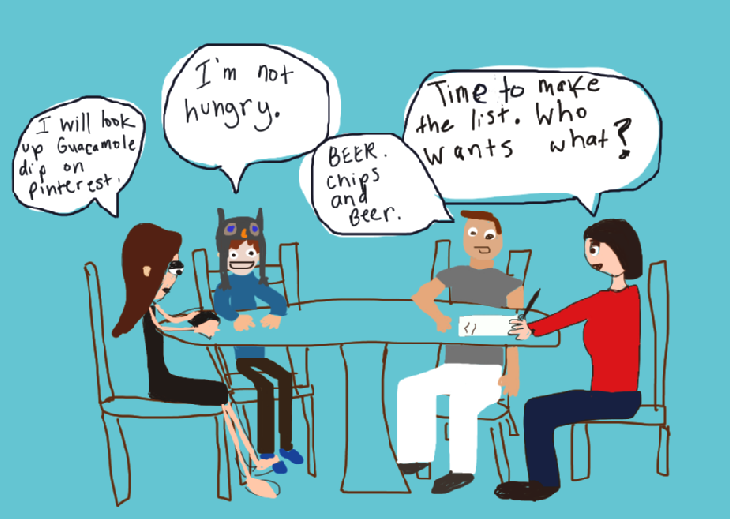
First, there’s the list. Gotta make a list, or nothing’s going nowhere. The process is complicated though, because Momsy likes to please everyone and nobody knows what they want.  I’m never hungry, Shannon searches Pinterest for a vague recipe, like Guacamole dip, and Dad wants Beer. Also, Chips. So it’s like this:make the list

2hrslater

After the list is finally made, it’s time to go to the store. I’ll volunteer to go because Momsy’s tired because she sleeps only 3 hours a night. Also, it takes us nearly two hours to make a list. So off I go.

When I first get to the store, I’m optimistic that everything will go my way.

But after just a few moments, my confidence is crushed. Then it is thrown in the garbage.

There was this:

carts

And then, there was this:

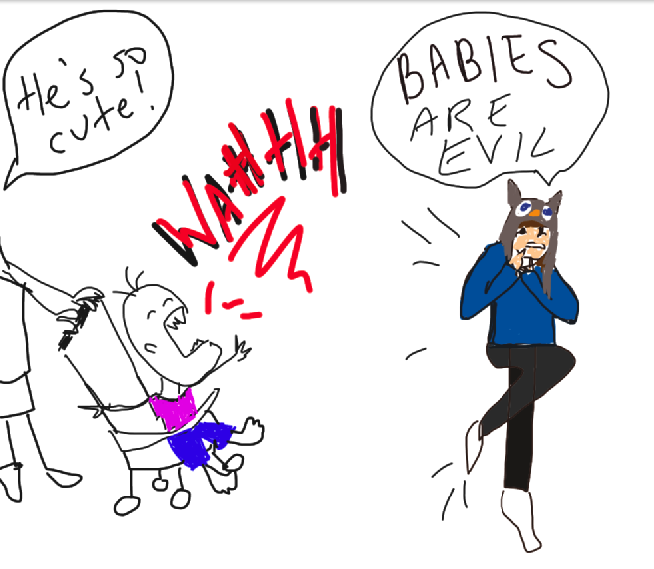
babies

With the people noises, the fluorescent lights, the squeaky floors, the colors, the smells, I KNEW I had to stay focused. If I didn’t, I wouldn’t make it out of there alive. The family needed food. It was do or die.

focus

I figured the best way to do this was to pick an item on the list and just focus on that item. Nothing else would matter until that item was in the cart. Yes. This was my strategy.

So I took a gander at the list.

list

And there it was. PASTA. That’s easy. I got this. I GOT THIS.

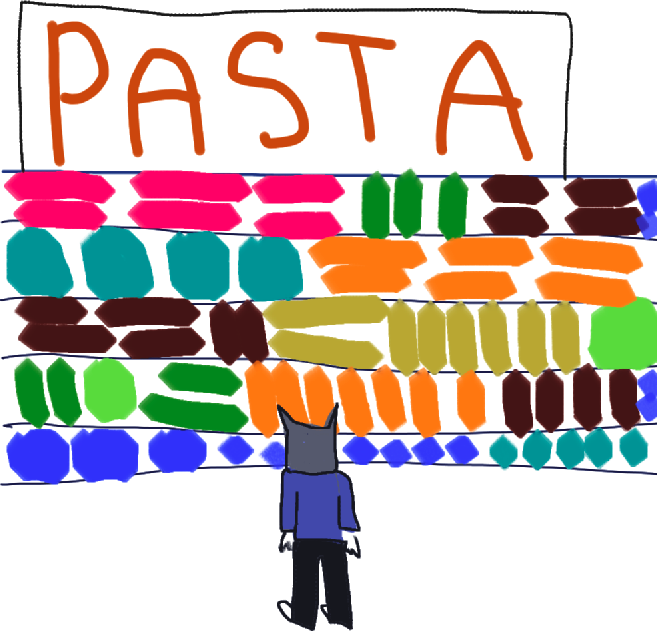
As I make my way to the pasta aisle, I see that the choices are enormous. There are different brands, different shapes, different colors; whole wheat, whole grain, whole lotta choices.

pasta

But then it hit me. The pasta aisle was HUGE. The shelves were towering over me. I started to sweat, and my eyes felt hot and squinty. It was like that time Frodo Baggins decided to go on an adventure to Mordor with his bro Sam, and it ended up being not-so-fun for either of them.

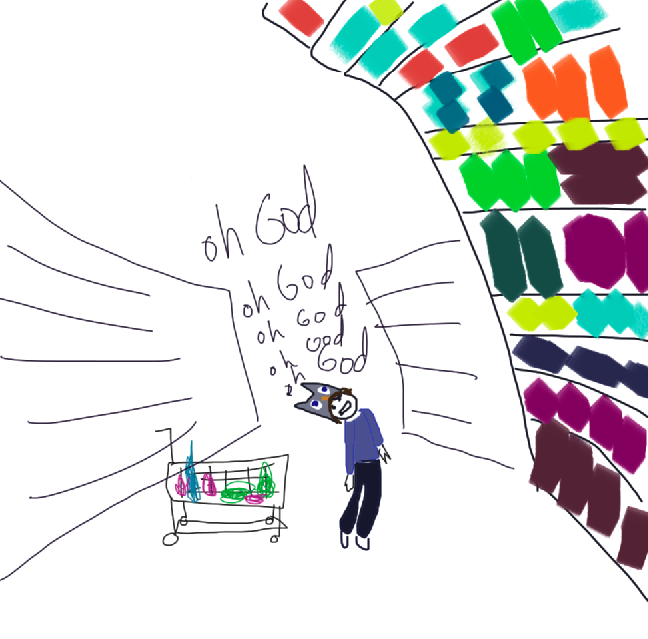
It was all too much. This was the end. This was the end of the end.

pasta2

In a panic, I just grabbed any pasta and dashed out of there to the next aisle. However, I’m barely around the corner when I sensed a familiar presence; an unwelcome presence.

turn corner

And then I saw it.

babyscream

IT WAS THE EVIL BABY. It was following me. Somehow, I knew it could sense my fear. I was straight-up terrified.

Picture 12

I didn’t know what to do.  So I smiled.

Picture 9

PUT SOME PASSION INTO IT, I thought to myself.

Picture 8

My face hurt from smiling at the evil baby, but my efforts were futile, so I decided to make a run for it. I had nothing left to lose.

Picture 20

After my half-mile sprint across the store, I hid behind a cart of baked goods and reviewed my options. Evil baby screamed in the distance. It was his battle cry.

Picture 21

The fluorescent light glared down upon me. Everything else was dark and cold (probably because I was near the frozen food aisle, but still, it was very dramatic and tense). I huddled myself behind the bread and the light revealed my hiding spot; like a criminal during interrogation. I was nearly done with the food shopping. Somehow, I managed to gather my items during my sprint.

I stood up and gathered my last items. It was time for checkout. I had to be swift.

The problem with getting on-line to pay for your food is that there are usually about 10 possible registers you could go to, but only 2 or 3 are actually open. Not to mention, it’s overstimulating to be waiting there.

Picture 22

So not only am I not overstimulated from the workout that is food shopping, but now I have to wait on a line with noisy people doing noisy things with noisy machines while the speakers in the store shout noisy things at me.

I waited on line #2 for what seemed like half a century, and when I finally get up there, I’m relieved. Of course, the pimply adolescent male at the register informs me that he is now “closed.”

Picture 23

No he wasn’t closed. His light was still on. I decided to address this contradiction. I thought it would be best to address him by his name, that way, I’d look like I meant business, while still being sincere. So I glanced at his name tag.

Picture 20

Ok. So the dude had a weird name. I’m gonna roll with it.

Picture 21

Picture 22

Picture 24Picture 25Picture 26

Well, “Blake,” obviously didn’t give a flying poo about me or the fact that I was near sensory meltdown. Thankfully, another store employee said something like, “Blake, just help this young lady then you’re done for the day.”

I was overjoyed with gratitude for this person! I could’ve cried with thankfulness. Dear person, whoever you are, I love you.

And I was all like:

Picture 28

And Blaeck was all like:

Picture 29

After dealing with Blaeck, and the incredibly loud beeps at the register, I left the store with no additional encounter with evil baby.  Although, his demonic screams will forever haunt my nightmares.

I put the groceries into my trunk, got to my car, and got lucky with no horn/car alarm related incidents. It was just another food shopping adventure. Victory was mine. All in a day’s work.

Picture 31

Thunderstorms

For all you people who just love thunderstorms, I envy you. In my body, thunderstorms are the worst. Take all the worst things ever, put them together and wrap them up in shiny paper, and put a bow on it, and you have thunderstorms. If you’re like me, anticipating a thunderstorm is like preparing for the Apocalypse.  You have your gear. You have your rituals. You have your safe spot (usually the dog is in your spot too because dogs know what’s about to go down and they don’t mess around).

Let’s go over exactly why thunderstorms are so dreadful awful.

The most obvious problem here is that the source of the problem is uncontrollable. I can’t control the sky. You can’t control the sky. Your creepy uncle who collects miniature ceramic horses can’t control the sky.

Thunderstorms are evil in their ability to be wherever they want, whenever they want.

First, the sky gets dark and ominous. When has anything good ever come from being dark and ominous? Let’s see….oh yes, nothing good has ever come from darkness and ominousness.

notgood thunderstorm

After the initial stage, when the storm has warmed up and stretched, the real fun begins.

The sky flashes with a bright, blinding light. I for one am only slightly happy about this because it gives me a warning. At the same time, I’m startled by the light – especially if the room I’m in is dark – and thrown off balance entirely. Something like this:

lightning

Then – the worst part – THUNDER. It’s loud. It’s sudden. It’s everywhere. It’s merciless. Thunder, like all sound, cannot be grabbed, pushed, or shooed away. It’s just there, in the air, being a jerk.

Regular people –  those neurotypicals – just love a good thunderstorm. They love to love it, and they don’t understand why I don’t love it. They’re all like:

thunder fun

Those people suck. There, I said it. Meanwhile, I’m like:

boomcrack

As I type this, a thunderstorm is warming up itself in the sky. The lights are flickering. My left eye is twitching. But most importantly, it’s time to make some important decisions. It’s time to look at my choices.

choices

Choice A: My musicians earplugs. I never use these because they are painful and ineffective. This shouldn’t even be a choice… I don’t know why I included it. *facepalm*

Choice B: Orange wax earplugs. Both effective and less painful. AND ORANGE!

Choice C: Noise-canceling headphones. A+ for comfort, but I’ll give them a C- for effectiveness. Thunderstorms are too much for these devices.

Choice D: aka, the best choice. These are my ZEMS.  If I could, I would wear these babies everywhere.

The only way I’ve learned to fight thunderstorms is by wearing my ZEMS. God Bless my ZEMS. They are awkward as hell, but bless ‘em.

ZEMs are worn by people with large heads who work near loud machinery or airplanes. They are also worn by me, and I definitely don’t have a large head by any means. These ear devices look like headphones, only uglier. They take the sound that is coming towards my ears and say “NUH-UH SOUND. NOT TODAY,” and then sound is like, “oh, my bad.”

265-photo3

Above is a gentleman wearing his ZEMS. Nice job, mister. Way to go.

Choice E: My fingers. By shoving my pointer fingers into my ears, I can substantially decrease thunderstorm sound invasion. Further, my fingers make for good rapid-fire ear protection – perfect for those sudden moments of thunderstorm doom when there’s no time for making choices!

Choice F: Finally, we have choice F, meltdown/coma. F stands for failure, futile, freak-out, frenzy, and another f-word. When all else fails, my last choice is to just give into the thunderstorm and have myself a sensory meltdown. Choice F is not very effective, by the way.

So what’s a girl to do?

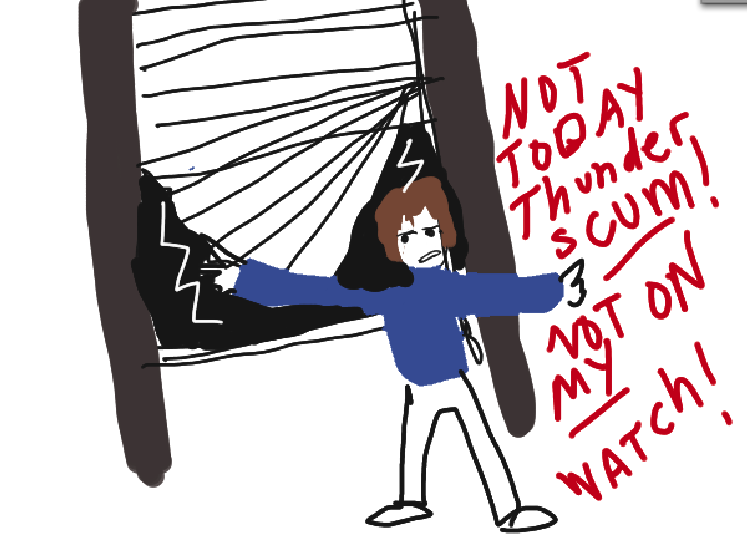
I often try to pretend to be a thunderstorm badass, but that can be hard to do considering badassery is probably the last characteristic I would pick to describe myself in any given situation. This is what I would look like if I was a thunderstorm badass:

nottodaythunder

…and this is what I look like because I’m not a thunderstorm badass:

blanket safety

Hiding under the thunderstorm protection blanket with my dog.

Speaking of awful noises from the sky, the 4th of July is coming up…like now. I should make a post about that because it’s Independence Day  the worst day of the year.